BY THOBILE JIWULANE:
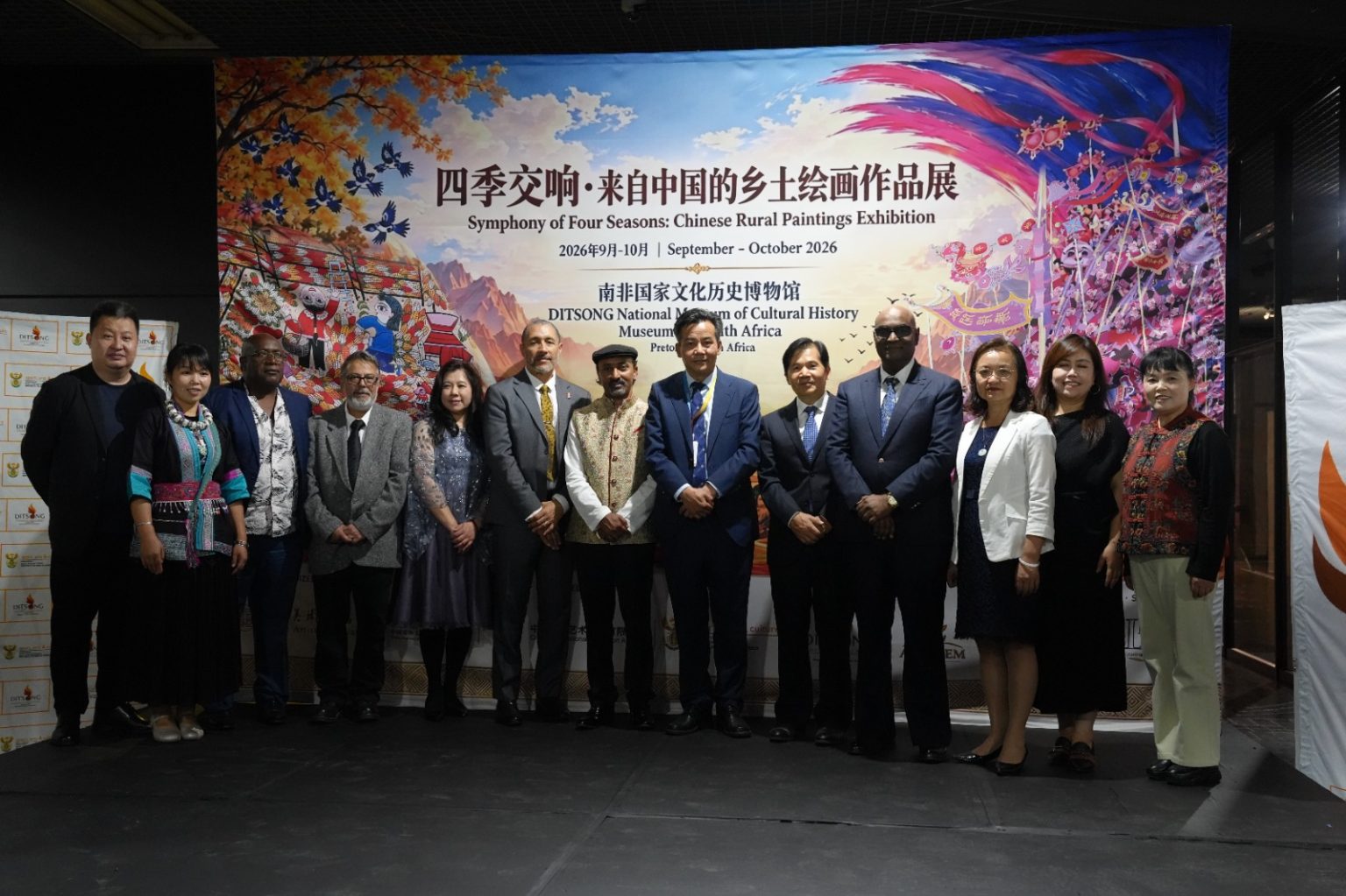
Cultural exchange, particularly in the arts, is beginning to shape a new way for Chinese and South African peoples to interact as the two countries seek to strengthen their relationship. This shift results from intentional efforts to build a bridge of cultural understanding between their citizens at various levels.
This was made clearer in statements made by high-profile speakers at the opening of the “Symphony of Four Seasons: Chinese Rural Painting Exhibition” in Pretoria recently. The exhibition is running from 18 September to 10 October at the Ditsong National Museum of Cultural History in Pretoria Central.
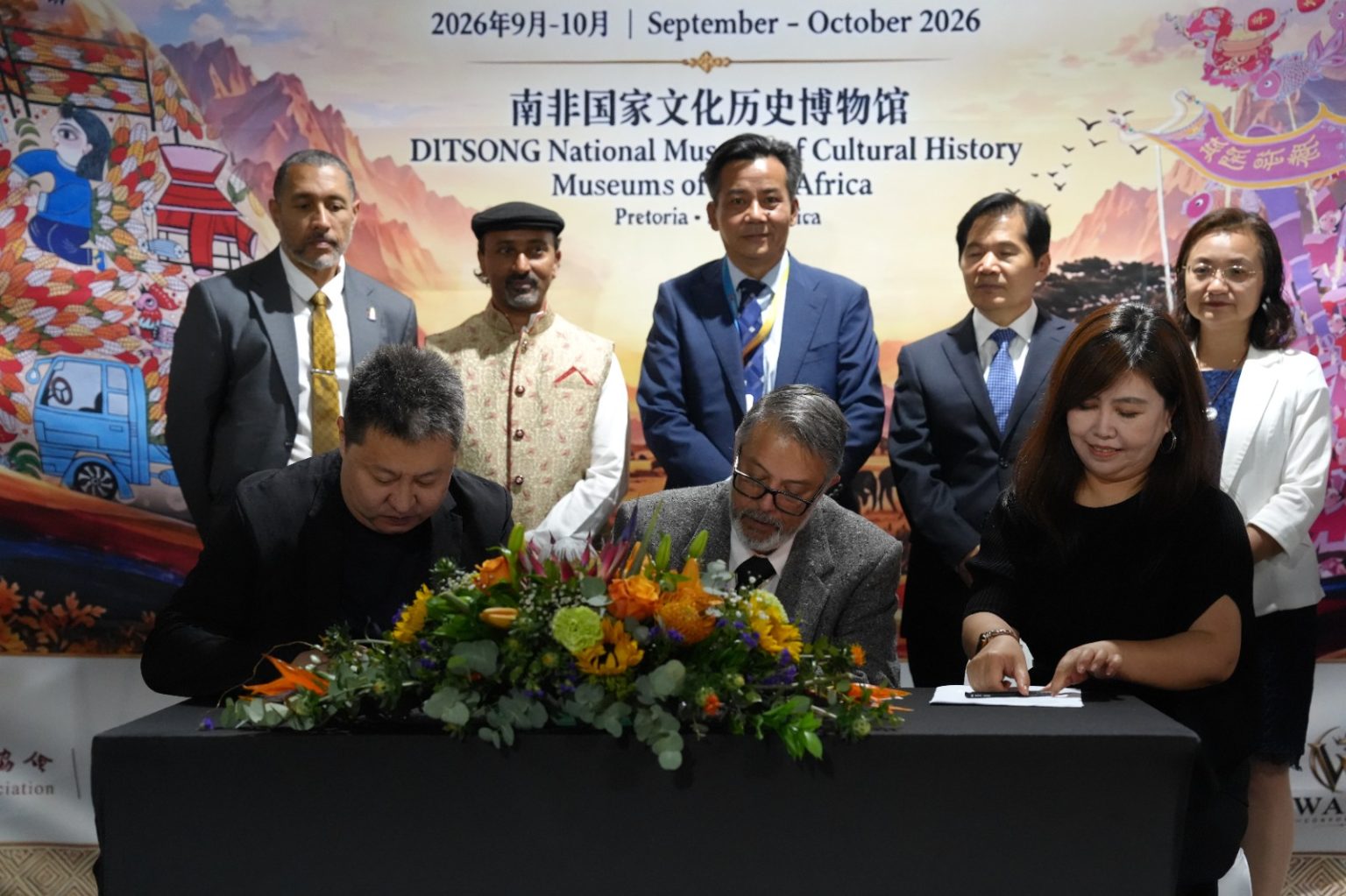
The event, hosted by Nancy Wang, General Manager, AFRIGEM Group & WANG Corporation South Africa, also marked the signing of a Memorandum of Understanding (MOU) between the China Artist Association and China Exhibition Group and the Ditsong Museum.
It coincided with South Africa’s Heritage Month, a time to celebrate the country’s rich heritage, arts, and culture, and the declaration of 2026 as the “China-Africa Year of People-to-People Exchanges.”
The main speakers included Zhao Haiyun, Minister Counsellor of the Embassy of the People’s Republic of China in South Africa, who explained the exhibition’s rural focus.
He contrasted the Chinese urban life characterised by mega-cities, towering skyscrapers, and high-speed trains with China’s traditional rural culture, which remains largely mysterious to the outside world.
Zhao noted that China’s success in lifting hundreds of millions of rural people out of extreme and absolute poverty is not just about statistics or economic data. “At its core, it is about human dignity; it is about ensuring that every individual, no matter how remote their village, has the right to a better life while taking pride in their identity and heritage,” he said.
The exhibition features over 40 artworks showcasing rural Chinese culture, including contributions from Chinese youth who are being published internationally. The China Artists Association selected these works under the theme “New Life · New Trends · New Year Paintings.” The pieces vividly reflect contemporary themes, portraying China’s new landscape of integrated urban and rural development, along with healthy, civilised social trends, and presenting a modern expression of Chinese rural painting.
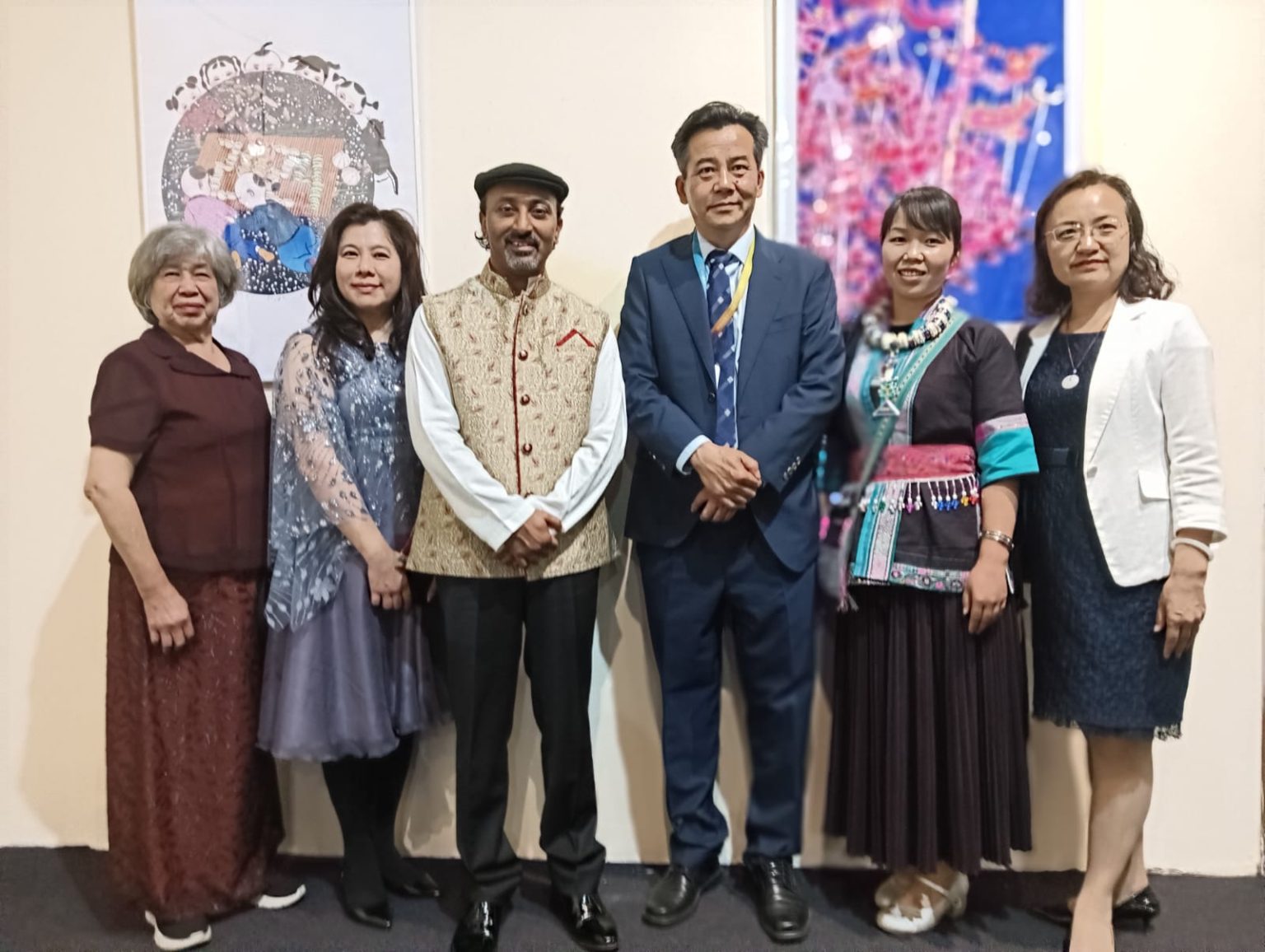
Zhao stated, “What you see on these walls and in the albums comes straight from the soil, the homes, and the hands of Chinese artists. They depict our living folklore, our cultural heritage, and our traditional arts.” He acknowledged the constant tension between rapid urban development and rural ways of life, emphasising the need for long-term reconciliation. He pointed out that Chinese traditional culture shares a philosophical connection, or a ‘beating heart,’ with South Africa’s concept of Ubuntu.
An idea is being proposed to establish a sustainable mechanism involving the Tshwane Metro municipality, the national government, and local artists to attract Chinese artists from various art genres to South Africa each year. This initiative aims to bridge the gap between Chinese and South African artists and demystify the cultural relationship between the two nations, rather than approaching it randomly and fragmentedly.
Zhao remarked, “The rich culture and heritage, along with the immense creative energy and aspirations of our peoples, deserve a better arrangement.” He also announced that, in celebration of South Africa’s Heritage Month, the Chinese community will, for the first time, organise the Chinese traditional festival, the Moon Festival, held recently in Pretoria on Saturday, 26 September.
Deputy secretary-general of the China Artists Association, Zhu Hongzi, also elaborated on the exhibition’s significance. Zhu noted that the exhibition is an important project under the framework of the 2026 Year of China-Africa People-to-People Exchanges and a vivid example of implementing the China-Africa Cooperation Forum’s people-to-people exchange partnership initiative and deepening mutual learning among civilisations.
The rural and peasant paintings on display vividly portray the vitality of rural communities in China and the profound changes taking place in rural areas during China’s modernisation. He expressed hope that the exhibition would deepen long-term cooperation between the China Artists Association and South African cultural institutions, art schools and local artists, promote people-to-people exchanges within the China-Africa art community, and jointly write a new chapter in China-Africa cultural exchange.
Among the local guests were Dr Liaqat Alli Azam, chief executive officer of Leading Like Mandela Institute and Prof Kevin Thomas, dean of humanities at the University of Pretoria.
Dr Azam noted the timing of the exhibition with Spring, a season of flowers, nature’s beauty and renewal in South Africa. “These beautiful paintings inspire us to welcome a new season of growth, cooperation and cultural exchange, showcasing the beauty of Chinese rural life and the people’s deep love for life and a better future for all.
As we gather here to celebrate the Symphony of Four Seasons, I cannot help but see a beautiful symbolism: China and South Africa are also entering a new season of cooperation. A season of renewal. A season of deeper people-to-people engagement. A season in which we draw deeper on the fruits of the wisdom and the lessons of our civilisations and cultures and to sow these seeds to cultivate fruitful harvests for our people, our nations and our world,” Azam said.
He highlighted the significance of the recent BRICS Summit in New Delhi, India, which discussed cooperation across three pillars: Political and Security, Economy and Finance, and Cultural and People-to-People Exchanges. “Today’s event supports and aligns directly with the third pillar and contributes to all three. The deeper significance is not only the meetings, declarations or institutions, but also the idea of renewal, a world in transition and transformation.
According to Azam, the diverse paintings also convey the Chinese culture and pursuit of unity between humanity and heaven, harmony between humanity and the natural order, and the cycles of rebirth and renewal.
“This has great coherence with African spirituality and culture that teaches us about our interconnectedness with creation, community and those who came before us, our shared humanity and collective responsibility. In South Africa, we call this Ubuntu. “I am because we are”, Nelson Mandela described Ubuntu, stating that though we may be unique as nations, races, religions, and cultures, we are all branches on the same tree of humanity,” Azam said.
He said exhibitions such as Symphony of Four Seasons create a space where China and South Africa can encounter each other not only through governments and institutions, but through human imagination, the arts and a creative spirit of cooperation – our shared future.
“Let the Chinese brush meet the African canvas, let ancient wisdom meet modern innovation, let rural knowledge meet urban technology, let tradition meet creativity. Let China meet South Africa, let people meet people and let friendship become the bridge upon which the next generation walks,” he said.
UP’s Prof Kevin Thomas, who represented the University of Pretoria, emphasised bridging the gap between Chinese and South African cultures.
Referring to the display of the two countries’ artworks on the left and right walls of the museum, he said that though both sets of artworks represent rural life, there is a real-life gap between them, just as there is a real-life gap between the Chinese and South African cultural worlds, which must be closed.
He emphasised that such a cultural gap should be bridged by the people between them. “We are sitting between the two, and that is precisely our role: to inhabit that liminal space, to create connections across it, and ultimately to make that space a place where these two cultural worlds can meet. Visual art can help with that inhabiting, can help to create connections, and can help cultural worlds meet. This is because art evokes a universal language, – a language that is based largely on emotion,” Thomas said.
Alluding to what was said earlier by Frank Teichert, acting director of the Ditsong National Museum of Cultural History, about art emerging from the artist’s emotion, saying there is also the emotion that the art evokes in the viewer, and those emotions are universal. “We all understand happiness, sadness, joy, grief. And that common understanding can help bridge the gaps, fill the spaces in understanding, and demystify foreign worlds. “So, let’s take emotion, a common element of humanity, to help us emerge into a new spring of opening, of celebration, and of renewed possibilities,” Thomas said.
He highlighted that the University of Pretoria is striving to be an impactful global institution, with one of its transdisciplinary research pillars being cultural and creative resilience as the exhibition displayed. The university aspired to be both an African hub for excellence and a hub of African excellence.
“Being an African hub for excellence means we aim to serve as a nexus for strategic, generative, and transformational contact between Africa and the rest of the world, providing avenues for impactful collaborations that improve individual, societal, and environmental wellbeing,” Thomas said.
Ji Suchen, deputy general manager of the China Arts and Entertainment Group Ltd, introduced the group as an important Chinese institution for international cultural exchange. Over its 76-year history, the Group has played an active role in China-Africa exchange and cooperation and has been committed to building bridges for cultural exchange between China and Africa. The Silk Road International Theatre Alliance, initiated by the Group, has brought together 10 member organisations from seven African countries.
Looking ahead, the Group will continue exploring new pathways and expanding cooperation in cultural industries, digital art and joint creation, promoting mutual learning and shared growth between China and Africa.
Ditsong’s Teichert said the works on display are filled with a joyful, celebratory atmosphere and are deeply moving. Last year, the China Artists Association held an exhibition of contemporary Chinese art at the museum, allowing South African audiences to appreciate contemporary Chinese artists’ diverse explorations.- @NewsSA_Online
Follow us on our social media platforms below: