At Statecraft 2026, the New South Institute brought together South African and international experts to examine the warning signs of institutional decline and the practical reforms needed to strengthen the machinery of democracy before failure becomes a crisis.
BY NEWS SA CORRESPONDENT:
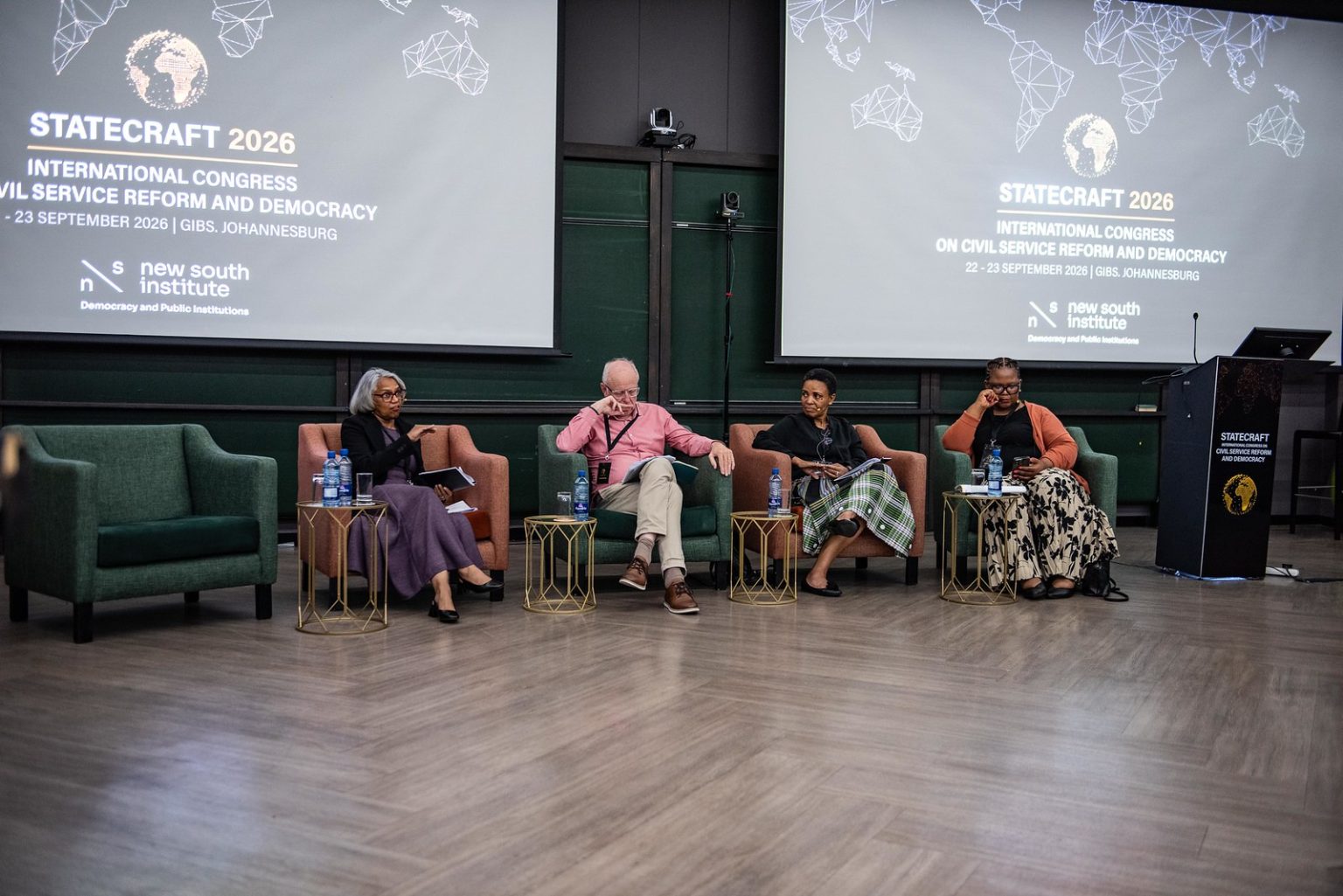
JOHANNESBURG, South Africa cannot afford to wait for its democratic institutions to fail before confronting the weaknesses that threaten them. This was the central proposition of Statecraft 2026: The Machinery of Democracy, a congress convened by the New South Institute (NSI) at the Gordon Institute of Business Science in Johannesburg on 22 and 23 September.
From deteriorating municipal services and financially distressed state-owned enterprises, to political interference, corruption, and the erosion of public-sector expertise, the recurring message from speakers and panellists to congress participants was clear: in South Africa, the warning signs are already evident, and urgent action is needed to prevent further institutional decline. Yet international experience demonstrates that decline is neither inevitable nor irreversible.
Bringing together international reform practitioners, former government ministers, public administrators, academics, civic leaders, and governance specialists, the congress examined how democracies can strengthen their institutions before administrative weaknesses develop into systemic failures. Its focus extended beyond identifying what is going wrong to exploring the practical reforms, institutional safeguards, and types of leadership required to prevent further deterioration and rebuild the state’s capacity to deliver.
Public administration seldom commands public attention until something goes wrong. When the lights go out, water stops flowing, public money disappears or essential services collapse, the consequences of institutional failure become impossible to ignore. By then, however, the underlying causes may have been developing for years.
When the Machinery Begins to Fail
Opening the congress, NSI Chief Executive Officer Ivor Chipkin returned to a fundamental distinction in South Africa’s constitutional settlement: the separation of political office from administrative office.
“The post-apartheid state was structured around a distinction between political office and administrative office: two related but distinct fields of work. Political work is done by politicians; administrative work by public servants. Separate and distinct domains, related but nonetheless autonomous,” he explained.
Chipkin argued that the erosion of this distinction had been particularly damaging in local government, where administrative failure could not be explained by corruption or inadequate skills alone.
He identified the Public Service Amendment Act as an opportunity to reconsider the place of professional administration within South Africa’s democracy. However, he cautioned that the opportunity for reform remains fragile and requires sustained attention.
POLITICAL APPOINTMENTS: The First Test of Institutional Independence
How governments appoint senior public servants emerged as one of the most consequential questions facing institutional reform.
Drawing on South Korea’s experience, former Minister of Personnel Management Pan Suk Kim described reforms introducing competency assessments, open recruitment and structured appointment processes. He cautioned that “removing political discretion doesn’t automatically produce merit”, emphasising the need for clear competency standards and professionally constituted selection panels.
Chile offered another model. Magdalena Rojas Wettig explained how, in Chile, technical screening produces a shortlist of qualified candidates from which political authorities make the final appointment. “It’s a combination between a merit-based filter, with strict selection criteria, and elements of political confidence as well,” she said.
Indonesia’s Eko Prasojo described reforms designed to protect civil servants against arbitrary political intervention. “The big issue at the time was how to protect civil servants from political intervention and arbitrariness,” he explained.
The international experiences illustrated different approaches to balancing political leadership with merit-based appointments. Their common purpose was to reduce arbitrary interference while preserving legitimate democratic authority.
STATE CAPTURE: Institutions Can Survive on Paper While Losing Their Independence
The congress also examined how formally independent institutions can lose their autonomy to informal networks of political and economic power.
Political scientist Bálint Madlovics described what happens when such networks capture the institutions intended to hold governments accountable. “The formal institutions lose their autonomy. They lose their power. The parliament, the tax office, the prosecution — they are not autonomous and they are not checks on the government anymore. They are instruments of the government,” he warned.
Dušan Pavlović drew on Serbia’s experience to explain how the extraction of public resources can sustain political organisations as well as enrich individuals. “The main goal of the captors is to extract. They extract public assets, but not exclusively for their own private wealth or enrichment. They do it also to make the whole political machine work,” he said.
Daniel Kaufmann challenged the assumption that captured institutions can be relied upon to reform themselves. Referring to international experiences of reversing state capture, he observed that “not a single one was stopped by captured institutions reforming themselves”.
Instead, his comparative analysis pointed to the importance of independent courts, constitutional bodies, civic mobilisation and other institutions that remain outside captured networks. “At least one uncaptured pillar was the entry point,” he explained.
The discussion exposed a difficult reform dilemma: establishing new institutions is not necessarily sufficient if those institutions can themselves become vulnerable to capture.
From Legislation to Institutional Culture
South Africa’s own experience brought the discussion from constitutional design to the daily realities of government, where legislation and institutional safeguards mean little unless they are translated into practice.
Former Transnet CEO and Director-General of Public Enterprises from 2005 to 2009, Portia Derby emphasised the importance of trust and clearly defined responsibilities between ministers and senior officials. Recalling her own experience, she said,
“The relationship of trust between myself and him (the minister) was quite central to how we were able to run the department.”
Derby proposed joint briefings when political and administrative leaders take office, agreement on priorities and regular joint performance reviews. Her contribution illustrated how administrative independence and political leadership can reinforce one another when responsibilities are clearly understood.
Andrew Boraine challenged the assumption that South Africa’s institutional problems could be resolved simply by introducing further legislation. “It’s not a question of writing new laws. It’s a question of enforcing the damn law that we already have,” he said.
Identifying cultures of impunity, departmental rivalry and excessive accountability to political parties as obstacles to effective government, Boraine argued that meaningful reform also requires ethical leadership. “The only thing that changes culture is modelled behaviour by ethical leaders,” he told participants.
For Cynthia Stimpel, Director for Whistleblower Advocacy at Courage Hub SA, institutional culture is inseparable from the treatment of those who expose wrongdoing.
“When we talk about protection, it’s not only about protection for loss of life. It is also protection against the loss of your job, your ability to work, to find future work,” she said.
Drawing on her own experience at South African Airways, Stimpel argued that organisations must investigate reported wrongdoing rather than retaliate against those who report it. “You should deal with the issue at hand and not the person,” she insisted.
She also connected corruption directly to deteriorating public services, questioning why discussions about failing infrastructure and inadequate funding so often overlook the recovery of money lost to corruption. “We’ve lost the purpose of firstly serving our community, and we’ve lost the purpose of just doing the right thing,” she said.
The discussion reinforced a recurring message: institutional reform cannot be accomplished through legislation alone. It must change how officials are appointed, supported, protected, and held accountable.

STATE-OWNED ENTERPRISES: Clear Mandates are Meaningless Without Clear Accountability
The governance of state-owned enterprises (SOEs) provided another example of the consequences of blurred institutional responsibilities.
Former Public Enterprises Minister Alec Erwin returned to the original purpose of South Africa’s SOEs and the importance of clear mandates, coordinated strategy and appropriate long-term financing. “The job of the state enterprise is long-range strategic investment,” he said.
Erwin argued that SOEs cannot be managed or assessed as though they were conventional private companies because “the balance sheet structure is different and the objectives are different”.
Martha Ngoye drew on her experience at Transnet and PRASA to illustrate how formal governance structures can be undermined when the responsibilities of government, boards and management become confused. “Once you have that blurring of the lines, you are not going to get it right,” she warned.
Ngoye argued that even an apparently clear mandate offers little protection when competing political or personal interests influence institutional decisions. “Transnet also had a clear mandate, right, but with other mandates attached to that mandate,” she explained.
Claudelle von Eck, drawing on her experience on Eskom’s turnaround board, argued that rebuilding a damaged institution requires more than attempting to restore its previous operating model. “The former glory will not fit tomorrow’s story,” she said.
For von Eck, institutional recovery must address dysfunctional systems, fractured organisational cultures and exhausted employees, while preparing an organisation for changing circumstances and future demands.
Together, the contributions demonstrated why the recovery of South Africa’s SOEs requires more than new leadership appointments. It demands clarity of purpose, appropriate financing, effective oversight, and institutional cultures capable of supporting long-term performance.
JOHANNESBURG: What Would an Incoming Administration Actually Need to Do?
The panel discussion on Johannesburg gave immediate practical expression to these wider institutional questions.
Moderating the session, Ann Bernstein of the Centre for Development and Enterprise placed the city’s governance difficulties in a national economic context. Citing figures indicating that Johannesburg had gained approximately 750,000 residents over a decade while creating only 30,000 jobs, she challenged panellists to identify what an incoming administration would need to change to restore the city’s capacity to govern, provide services and create employment opportunities.
Former City Manager Trevor Fowler placed financial discipline, competent appointments and political stability at the centre of recovery. “The people that are in the coalition have to accept that they are in a coalition and can’t have motions of no confidence every six months,” he argued.
Fowler called for the restoration of professional management and a more disciplined approach to municipal finances, recognising that residents are both citizens entitled to services and customers whose payments sustain municipal operations.
Public finance specialist Roland Hunter called for a citywide emergency recovery plan and questioned the financial management of Johannesburg’s municipal utilities. He argued that Johannesburg must establish the true costs and revenues of its utilities before deciding how their income should be used.
Ferial Haffajee brought the discussion to the political and institutional obstacles that could prevent even a well-designed recovery plan from succeeding.
Drawing on her research into municipal entities, she raised concerns about political patronage and argued for transparent senior appointments, stronger accountability, and the restoration of meaningful public participation.
Haffajee also called attention to women’s safety and homelessness, connecting the urgency of Johannesburg’s institutional recovery to the everyday experiences of its residents. Drawing on her engagement with the Johannesburg Crisis Alliance, she called for functioning ward committees and greater accountability to communities. “We have to put people’s power and people’s voices back at the centre,” she said.
Urban development practitioner Tanya Zack challenged the city’s tendency to develop new policies without implementing existing plans.
She argued that Johannesburg must recognise the economic contribution of migrant entrepreneurs, informal traders and small-scale landlords. She also proposed development-led approaches to inner-city regeneration and housing, including support for small landlords and building-specific responses to distressed properties.
Rather than offering a single prescription, the panel exposed the interconnected nature of Johannesburg’s difficulties. Financial recovery, administrative capability, political stability, infrastructure investment and public accountability cannot be addressed in isolation.
INTERNATIONAL LESSONS: How Reforms Survive Changes of Government
Experiences from Brazil, Slovakia and Latin America demonstrated why even well-designed institutional reforms can unravel when governments change.
Brazil’s Francisco Gaetani described the fragility of professional public administration when its independence depends heavily on the political leadership of the day. “We don’t think that this is permanent. It’s not institutionalised. It has depended a lot on the president of the day,” he said.
Professor Katarína Staroňová examined how civil-service protections introduced in Central and Eastern Europe had subsequently been weakened or reversed. She emphasised the importance of professional networks that help preserve expertise and institutional continuity.
“Professional networks motivate civil servants to stay in the system, not to disengage, and keep the institutional memory,” she explained.
Dr Conrado Ramos Larraburu drew on Latin America’s experience to examine the relationship between political patronage and professional administration. “We will always have some degree of patronage. The question is the scope and the quality of this patronage,” he observed.
He argued that reforms must account for political disincentives rather than assuming that legislation alone will persuade future governments to respect administrative independence. “What protects professionalisation is not the statute itself, but the political cost of violating it in each concrete case,” he said.
The international comparisons pointed to several mutually reinforcing safeguards: transparent appointments, professional networks, institutional oversight, sustained political commitment, and a public service capable of retaining expertise across changes in government.
Training Public Servants to Deliver Results
Training was examined with equal scrutiny.
Nigeria’s Funke Adepoju challenged governments to measure what changes after officials complete training, rather than simply counting courses and certificates. She questioned, as an example, the value of training officials in information technology if they return to workplaces without adequate equipment.
Adepoju described an approach in which senior officials identify workplace problems, develop practical interventions and undergo follow-up assessments after 90 days to establish what has changed.
Peru’s Guillermo Valdivieso Payva highlighted the difficulties created by staff turnover and the loss of institutional knowledge. He described efforts to strengthen public-service training and develop a pipeline of future officials through professional education.
Professor Emma Crewe challenged the assumption that leadership development can be reduced to standardised courses. “We shouldn’t accept blueprints and we shouldn’t just look for formulas,” she said.
Crewe argued that effective leadership is developed through practical experience, collaboration, and an understanding of the political and organisational circumstances in which public servants work. “An individual can’t do anything all on their own,” she reminded participants.
Together, the speakers challenged governments to connect professional development to measurable improvements in institutional performance and the quality of services citizens receive.
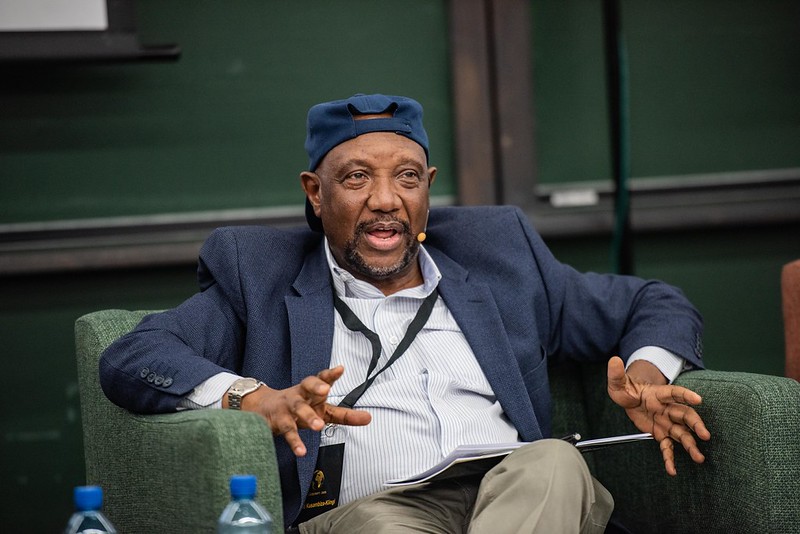
Citizens Must Have Influence, Not Merely an Invitation to Participate
The congress’s final discussions returned to the people whom democratic institutions exist to serve.
Drawing on Medellín’s experience, former mayor Sergio Fajardo described an approach to urban transformation that concentrated investment in disadvantaged communities, while involving residents in shaping projects. “Our principle was the most beautiful places for the humblest people in town,” he explained.
Fajardo argued that successful urban reform requires both political leadership and sustained engagement with communities. “The community has to see what is happening. Let them talk, let them think, and take your time explaining,” he said.
Paynesville Mayor Robert Soluntul Bestman emphasised the importance of institutional continuity and recognising the work of previous administrations, rather than repeatedly starting again when political leadership changes.
“We have to be clear to identify the work of the people before us,” he said, drawing parallels between the governance challenges facing Johannesburg and other African cities.
The final panel examined how civic participation can move beyond consultation to influence decisions and improve accountability.
Nishendra Moodley, CEO of the Economic Development Partnership, questioned whether South Africa’s existing participation structures are fulfilling their intended purpose. “Ward committees, particularly, are quite prone to political capture and are quite often performative tick-box exercises in participation,” he said.
He proposed involving municipal officials directly in ward committees alongside councillors and community representatives, allowing residents to engage with those responsible for implementing decisions.
“We’ve absolved officials of the really critical relationship they need to hold with communities and with citizens,” Moodley argued.
Fred Kusambiza-Kiingi of Planact argued that communities facing persistent exclusion need credible organisational structures to engage institutions with political and financial power.
“There’s no way communities who are underserved and not seen will be able to penetrate those who have the resources and that power without being structured,” he explained.
He described Planact’s work of organising informal-settlement communities into collective structures capable of engaging municipalities and strengthening accountability.
Bhavanesh Parbhoo of the Industrial Development Corporation presented the Social Employment Fund as an example of how employment programmes can strengthen the capacity of civil society to address local problems.
Describing an initiative in KwaZulu-Natal’s Ugu District, where informal early childhood development practitioners established professional learning communities, he explained: “Every two weeks you sit in something that’s called a professional learning committee, and you start teaching each other what’s working.”
What began as peer learning subsequently developed into regular community meetings involving ward councillors, traditional leaders and education officials, illustrating how local organisation can create new channels for participation and accountability.
The distinction emerging from these discussions was clear: participation has limited value if communities are heard but have no meaningful influence over what government subsequently does.
From Discussion to Institutional Reform
Closing Statecraft 2026, Chipkin stressed that the congress was intended to create more than a forum for exchanging ideas. “The idea of a conference is not just discussion. It is to convene the space, convene the kinds of people that can answer these questions going forward,” he said.
He identified an agenda extending over the next 12 to 18 months that will address a number of issues including senior appointments, institutional backsliding, public-service training, state-owned enterprises, and public participation.
Across the congress, the proposed solutions differed according to national and institutional circumstances. What connected them was the recognition that democratic resilience depends on more than elections, legislation or changes in political leadership. It requires professional institutions capable of implementing decisions, managing public resources, resisting improper interference, and responding to citizens.
The overriding message emerging from the congress was that institutional failure must be confronted long before it becomes a public crisis. Strengthening the machinery of democracy demands sustained political commitment, professional administration, effective oversight, and meaningful public participation.
The warning signs in South Africa are already evident, but so too are the opportunities for reform. The challenge now is to translate those opportunities into action before further institutional deterioration makes recovery more difficult, more costly, and more damaging to the people whom government exists to serve. – @NewsSA_Online
Follow us on our social media platforms below: