Pan-Afrikan Memory Lane: A Telegram from Mbuzini to Maputo
BY SIPHO MANTULA:
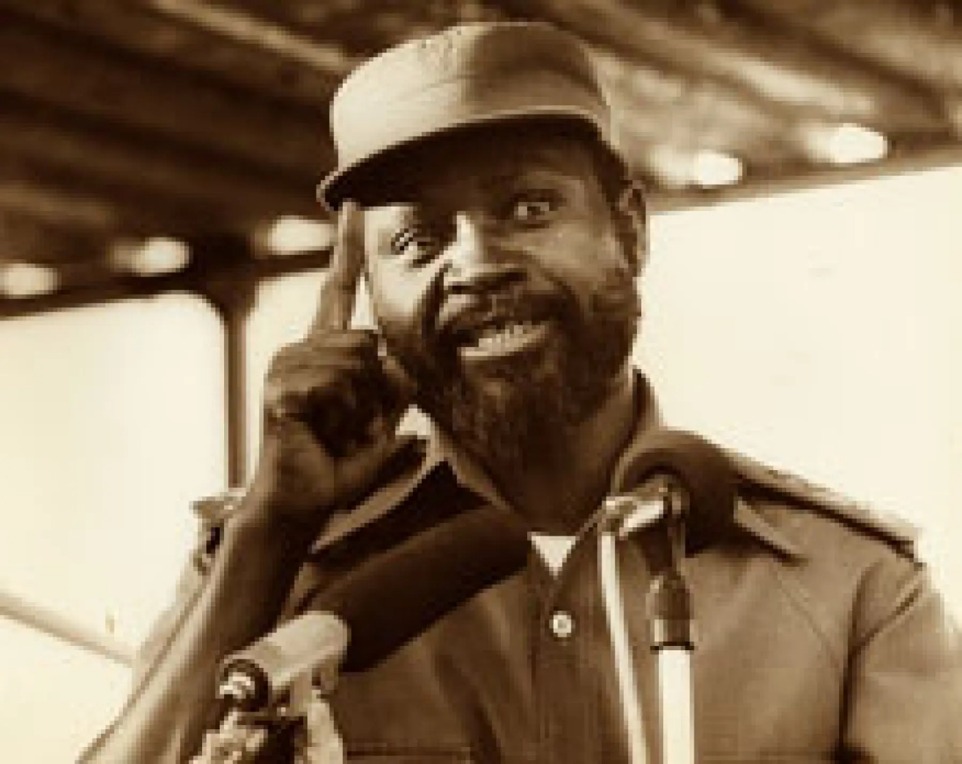
Forty years after the death of Samora Machel, Afrika is called to reflect not only on the life of one of its greatest liberation leaders, but on the unfinished struggle for economic freedom, continental unity, and genuine African sovereignty.
His challenge remains as urgent today as it was in 1986: will Africa merely be independent, or will it truly be free?
Today we remember him and the Mozambican people’s selfless contribution to the realisation of a ubuntucratic and democratic Southern Afrika and we quote the words of Bob Marley and the Wailers’ Redemption Song, “How long will they kill our prophets while we stand aside and look?”
The TRC post 1996, did not conclude that President Samora Machel was assassinated. It did, however, find that the official South Afrika apartheid-era explanation was open to serious question and recommended renewed investigation into one of Africa’s most enduring political secrets.
Samora Moisés Machel, founding President of Mozambique and a giant of the liberation struggle, died, but the ideals for which he lived did not.
Machel belonged to a generation that viewed freedom as more than political independence. To him, liberation meant economic sovereignty, human dignity, social justice, and Afrikan unity. He understood that the lowering of a colonial flag was only the beginning. True freedom would come when Africans controlled their own resources, institutions, and destiny.
His leadership placed Mozambique at the forefront of Southern Africa’s liberation struggles. When apartheid and colonial domination sought to divide and intimidate the region, Mozambique stood firm. It offered support to those fighting for freedom in South Afrika, Zimbabwe, Namibia, and beyond. The cost was immense, yet the commitment never wavered.
Today, forty years later, Machel’s message remains painfully relevant. Across Afrika, political independence has been achieved, but many nations continue to grapple with poverty, inequality, unemployment, dependency, underdevelopment and Cabo Delgado still in war stitches.
The struggle has changed form and shape, but it has not ended.
A Telegram from Mbuzini to Maputo
Comrade Samora Mache Afrika remembers.
We remember a leader who refused to bow before colonial power.
We remember a revolutionary who taught that political freedom without economic and cultural emancipation is incomplete.
We remember a Pan Afrikanist who believed that the liberation of Mozambique was inseparable from the liberation of Afrika.
Today, our flags are free, yet many of our people remain economically unfree and war is the order of the day.
The chains are no longer colonial, but dependency, inequality, and exploitation continue to confront our beloved continent.
Machel Legacy defined
Machel’s legacy is not preserved through memorials alone. It is honoured through action and solidarity. It is honoured by building social and communal economies that serve Afrikan people, strengthening continental solidarity, advancing regional integration, and ensuring that Afrika’s wealth benefits its citizens rather than external interests.
His generation, alongside Nkrumah, Nujoma, Mugabe, Kaunda, Cabral, Nyerere, Tambo, and Sankara, handed Afrika a vision, not a finished project. The responsibility for completing that project belongs to us as intellectuals and communities.
Makeba and Machel: Pan Afrikan Solidarity
Their relationship was therefore one of Pan-Afrikan solidarity: Machel advanced the struggle through political leadership and statecraft, while Makeba advanced it through Pan Afrikan cultural diplomacy, artistic expression and international activism.
Together, they represented two powerful dimensions of Afrika’s freedom movement.
Machel guarded the revolution from Maputo. Makeba sang it to the world. He carried the burden of statehood; she carried the soul of Africa into exile.
When Mozambique opened its arms to the oppressed, Mama Afrika opened her voice to their cause. Their paths converged in the unfinished struggle for a liberated and united Africa.
As we mark this anniversary, the most important question is not how Samora Machel died. The more important question is whether Africa is prepared to live the values for which he fought.
History remembers those who advance freedom, not merely those who celebrate it.
Revolutionary Samora Machel
They buried the revolutionary,
But not the revolution.
They silenced the voice,
But not the vision.
They ended a life,
But not the struggle.
From Maputo to Mahikeng, the march toward Afrikan unity, dignity, and liberation continues.
Ras Adv Sipho Mantula is a Researcher at Thabo Mbeki African School, UNISA) Rastafari Intellectual Soul Rebel – @NewsSA_Online
Follow us on our social media platforms below: