Through striking printmaking, layered imagery and mixed media, Isithunzi nokuzila explores the rituals of mourning and the memories we carry long after loss.
BY NEWS SA CORRESPONDENT:
Entertainment Correspondent
What happens to the memories, emotions and experiences we carry long after loss? And how do we begin to mourn the things, people and parts of ourselves we have left behind?
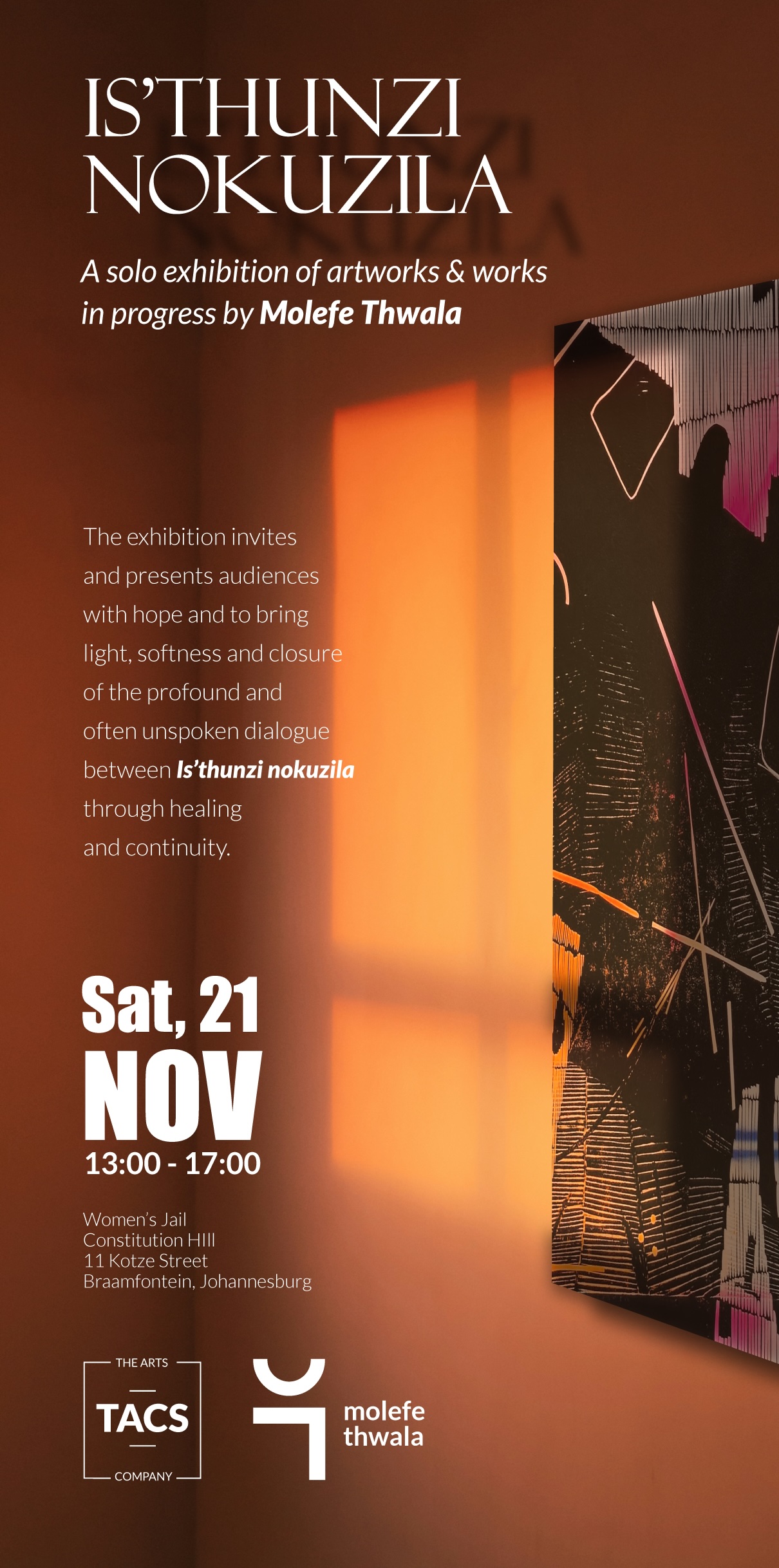
These are among the questions explored in Isithunzi nokuzila (Shadow and Mourning), a new solo exhibition by internationally exhibited South African artist, printmaker and curator Molefe Thwala, opening at the historic Women’s Jail at Constitution Hill in Johannesburg on Saturday, 21 November 2026.
An established figure in South Africa’s contemporary arts landscape, Thwala’s career spans artistic practice, exhibition curation and creative leadership. His work has been exhibited internationally, including in Paris, and forms part of collections at the Johannesburg Art Gallery and William Humphreys Art Gallery. As Chief Executive Officer of The Arts Company Soweto, he has also played a significant role in developing exhibitions, collaborations and opportunities for African artists.
\
In this latest body of work, Thwala turns his attention to one of the most universal yet deeply individual human experiences: grief. Bringing together completed artworks and works in progress, Isithunzi nokuzila explores the complex relationship between isithunzi (shadow or presence) and ukuzila (mourning), examining the rituals, memories and emotional landscapes that shape our experience of loss.
In many Southern African traditions, mourning extends beyond individual sorrow. It is a communal practice, shaped by cultural rituals, shared responsibilities and the collective remembrance of those who have died. Yet grief itself remains profoundly personal, experienced differently by every individual.
As Thwala reflects, “Grief just like happiness it is not a group project.” It is this tension between the individual and the collective, the visible and the invisible, that lies at the heart of Isithunzi nokuzila.
Giving form to the invisible
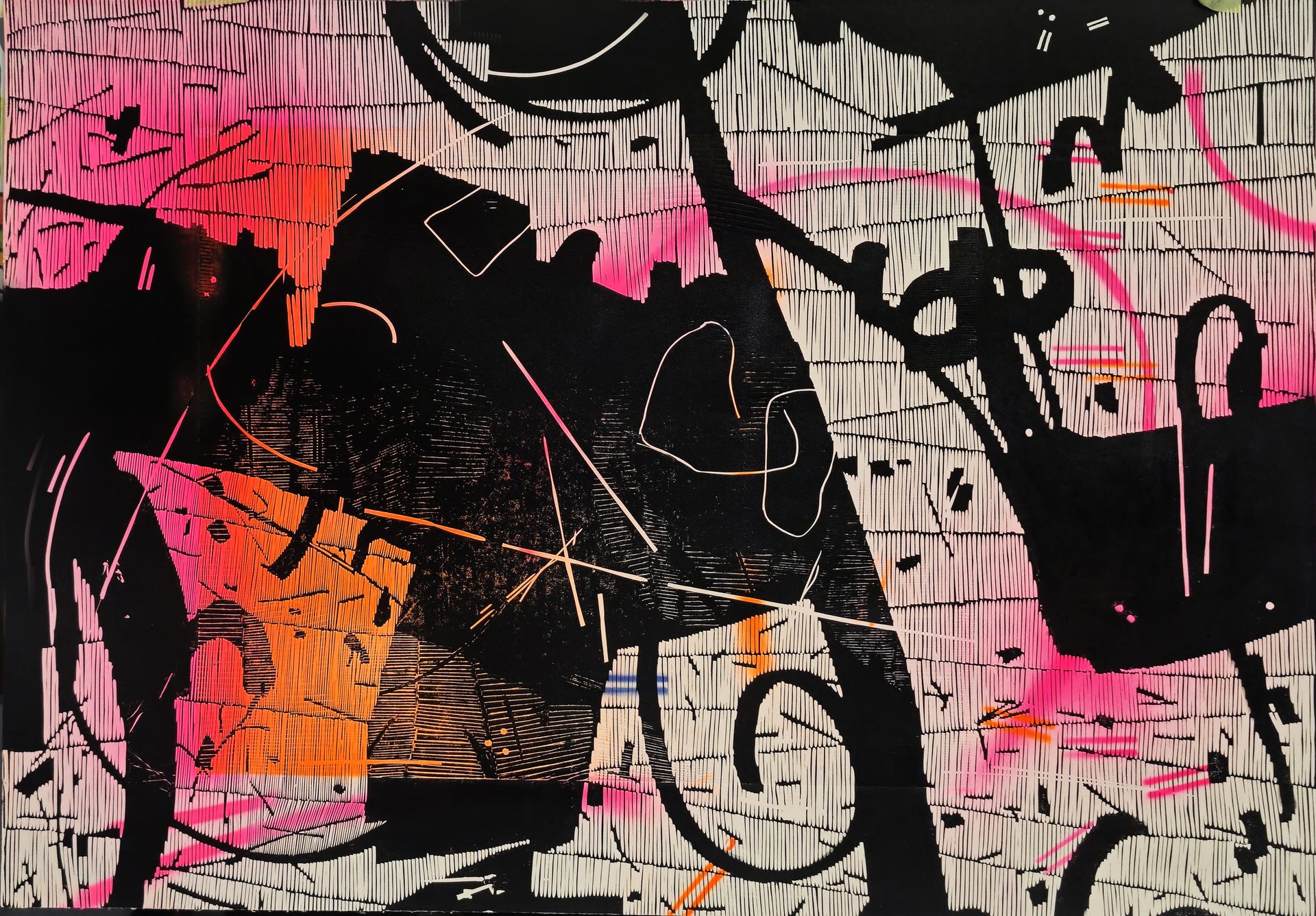
The exhibition’s visual language is as layered as the emotions it explores. Bold, dark forms sit alongside intricate linear textures, fragmented shapes and vivid passages of pink and orange. Fine, repeated marks create a sense of rhythm and movement, while overlapping shapes and contrasting areas of light and darkness suggest the shifting relationship between memory, presence and absence.
There is an almost physical quality to the imagery, with surfaces that appear carved, scratched, pressed and layered. Figures and forms seem to emerge from the darkness before disappearing into it again, evoking the fragmented and often unpredictable nature of remembrance. Central to the exhibition is the idea of the shadow as something more than the absence of light. For Thwala, it becomes a vessel for memory, a presence through which the past continues to inhabit and influence the present.
Working primarily in printmaking, including linocut and monotype, Thwala extends his practice into installation, video and found objects. The resulting body of work creates a layered visual language that reflects the emotional complexity of mourning and remembrance. The physical processes of printmaking also carry symbolic significance. Carving, inking, pressing and layering become ritualistic acts in themselves, echoing the ways in which memories are formed, revisited and preserved.
Rather than presenting a series of disconnected artworks, Thwala has conceived the exhibition as a cohesive installation, inviting visitors to move through an unfolding narrative of loss, reflection and healing. Through recurring motifs, shadow-play and the deliberate sequencing of works, the exhibition traces the emotional journey from the immediate pain of loss towards remembrance, understanding and, ultimately, the possibility of acceptance.
A space to acknowledge what remains unspoken
Beyond the loss of loved ones, Isithunzi nokuzila also considers the many forms of grief that often go unrecognised: the loss of relationships, places, identities, opportunities and former versions of ourselves. Thwala invites audiences to temporarily set aside the demands of everyday life and consider the emotional “open tabs” they may still be carrying, the people, experiences and chapters of life that have never been fully mourned.
The choice of Constitution Hill as the exhibition’s setting offers an additional layer of reflection. Once a place of imprisonment and suffering, the historic Women’s Jail now forms part of a precinct dedicated to memory, human rights and the continuing work of reconciliation. Within this setting, the exhibition creates an opportunity to consider how personal experiences of loss intersect with broader histories of pain, resilience and healing.
Ultimately, Isithunzi nokuzila offers an invitation to engage with grief without prescribing how it should be experienced. Through art, ritual and reflection, Thwala seeks to create space for hope, softness and the possibility of closure. The exhibition opens to the public on Saturday, 21 November 2026, from 13:00 to 17:00, and runs until 21 December 2026.
About Molefe Thwala
Molefe Thwala is a South African multidisciplinary artist, curator and creative leader whose practice spans printmaking, mixed media, exhibition curation and arts development.
He holds a Bachelor in Multimedia from the University of Johannesburg and a Design and Art diploma from Central Johannesburg College. As Chief Executive Officer of The Arts Company Soweto, Thwala leads the organisation’s strategic direction, creative development and partnerships, contributing to initiatives that advance African artistic expression and create opportunities for artists and creative practitioners.
His curatorial portfolio includes the June 16 exhibition, developed in collaboration with the City of Johannesburg, African Bank and Constitution Hill, as well as the inaugural International Print Portfolio exhibition connecting South Africa and Tanzania. He has also managed Transwerke Open Studio 2026 and Women of Substance 2025, and curated exhibitions and presentations involving the Johannesburg Art Gallery, the Joburg Art Fair and Decorex.
As a practising artist, Thwala has participated in numerous group exhibitions internationally. His solo exhibitions include uXolo: Images of Forgiveness and Izinto ziyashintsha eParis at Atelier Pons Lithografie Studio in Paris. His work is represented in collections including the Johannesburg Art Gallery and the William Humphreys Art Gallery. Through his artistic and curatorial practice, Thwala continues to explore the relationship between personal experience, cultural identity, memory and the broader social narratives that shape contemporary African life.
#molefethwala #isthunzinokuzila #MolefeSolo IG: @molefethwala FB: @Molefe Danisa Thwala FB: @The Arts Company Soweto
Exhibition details
Exhibition: Isithunzi nokuzila (Shadow and Mourning)
Artist: Molefe Thwala
Opening: Saturday, 21 November 2026
Opening time: 13:00–17:00
Exhibition dates: 21 November–21 December 2026
Gallery hours: 09:00–16:00
Venue: Women’s Jail, Constitution Hill
Address: 11 Kotze Street, Braamfontein, Johannesburg
Email: bridget@thebuzhive.co.
Follow us on our social media platforms below: