BY DR FUMENE GEORGE TSIBANI:
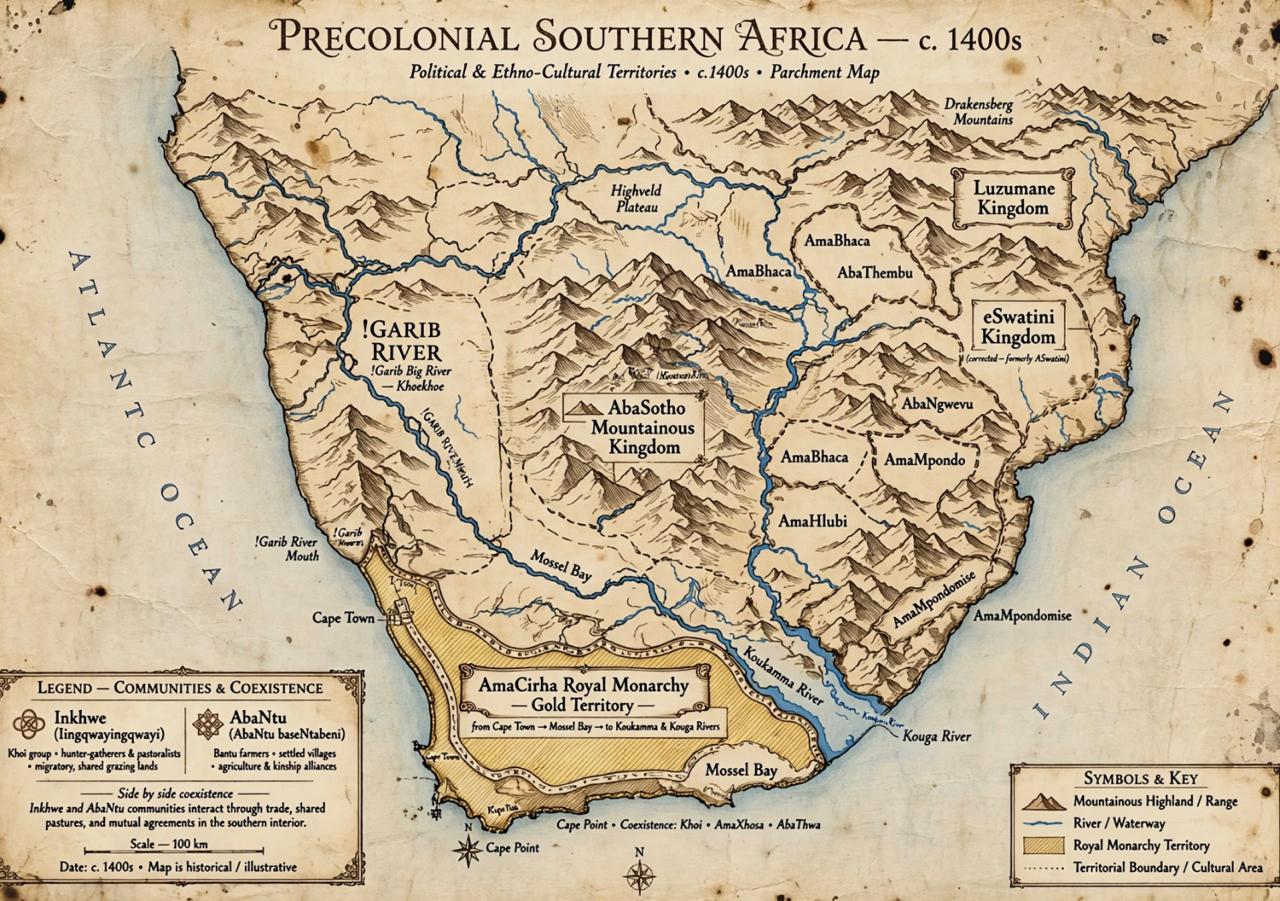
South Africa speaks proudly of unity and heritage restored. Yet for AmaCirha, custodians of zenibe yimbumba yamanyama, that we must be united as a single rock, heritage remains unfinished. More than three decades into democracy, the AmaCirha Royal Monarchy has not been restored as the first Kingship and Queenship amongst amaXhosa omthonyama.
For 62 million South Africans, that absence is a historical and heritage gap in African Royal Governance and Leadership model predating the British model of 1846. The question is no longer whether AmaCirha are royal. Engagements at the University of Fort Hare (UFH) between 14 March 2014 and 23 March 2024 found no dispute. The question is why institutions created to protect heritage have remained silent.
The South African Local Government Association (SALGA), the Congress of Traditional Leaders of South Africa (CONTRALESA), the National Heritage Council (NHC) and the Department of Cooperative Governance and Traditional Affairs (COGTA) have had the opportunity to address the erasure of AmaCirha genealogy. That erasure began under British colonial rule and Indirect Rule of 1846, when Sir George Grey, Governor of the Cape of Good Hope, recast African Kingship and Queenship as tribal authority for control. That British Indirect Rule (BIR) framework did not disappear in 1994. Through the Department of Native Affairs (DNA), shaped by Brownlee inquiries and Young Commission instruments, and through the Convention for a Democratic South Africa (CODESA) negotiations and sunset clause, its logic was carried into the new democracy in 1994. Consequently, AmaCirha are alienated together with Royal Clans of Nkosiyamntu aristocracy, izindlu zakomkhulu, such as AmaJwarha, AmaQwambe, AmaTshawe kaQhawe lamaQhawe, AmaXandeshe, AmaKwayi, OoNdzotho, ooThangana, AmaQocwa, AmaGiqwa, AmaQwashu, OoGxarha, AmaSukwini, oosiThathu, OoGaba, AmaGqunukwebe, AmaMfene and AmaNgwevu kaRhudulu.
It is exclusion from history, where kingly and queenly lineage is omitted. It is exclusion from power, where governance was replaced by colonial administration using fictional stories, iintsomi. It is exclusion from land and economy, where wars of land dispossession displaced AmaCirha governance in toto and severed the material base. It is exclusion from recognition, where Global North Acts of Parliament from the 1400s to date must be corrected to reflect African Royal Governance and Leadership and succession plans, with AmaXhosa omthonyama aristocracy at the centre as a case study for restoration of dignity and royalty.
When colonial order is normalised, African governance appears illegitimate. Heritage Month comes and goes, but without restoration, celebration rings hollow. In this context, Imbumba yamaNyama Royal Council has argued restoration cannot come through procedures designed to subordinate it.
That position was shaped at UFH, bringing together the NHC, Professor Luvuyo Dondodolo kaMthimkhulu of the University of South Africa (UNISA) and Professor Henie Cronje of Afrika Lead Non-Profit Company (NPC), led by former Protocol Manager of the Eastern Cape Provincial Legislature Andile kaMtiki kaNobhoma, Chairman Prince Zamile Ngetu kaMabhalarhana and Secretary General Reverend Mbulelelo Dyibishe kaManona kaMakeke. Their work linked sovereignty to the national calendar, where 21 March recalls Sharpeville, 27 April marks Freedom Day, 9 August honours women as bearers of generations and custodians of ubuntu, and 16 December calls for reconciliation as unity as rock.
Engagements were held on 21 March 2024 at Cambridge Hall in Buffalo City Municipality (BCM) and on 22 March 2023 at Roman Catholic Church in Mthatha. Correspondence dated 20 February 2020 from the Director General (DG) of COGTA on requests to the President of the Republic of South Africa to set aside the Nhlapo and Tolo Commissions stated that, as Commissioner Nhlapo was a retired judge, findings can only be set aside by a competent court.
A court application demands legitimacy and resources supported by the same institutions mandated to restore dignity. Yet there appears to be silent agreement amongst structures to erase AmaCirha from the heritage landscape in toto and continue unsustainable governance inherited from BIR. That house is a microcosm of defeated Kingships and Queenships in post-colonial Africa.
It was Ntsikana kaGabha, before his death in 1821, who left lofty counsel warning against greed and love of money, ningalithathi iqosha elingenamngxunya, and urging unity as a moral foundation.
In line with that counsel and DG advice, AmaCirha will nominate a King or Queen to proceed to a competent court in 2027, strengthening legitimacy through a transparent Special Elective Conference across media with independent observation, convened in the spirit of the Constitution of the Republic of South Africa as supreme law. This will be done without compromising African Royal Monarchy jurisprudence and protocols.
A nation that does not honour its first kings or queens cannot justly celebrate freedom. To govern AmaCirha through laws designed under BIR is to perpetuate control under a new name. True decolonisation requires restoration on own terms, guided by ubuntu and succession. Our unity as rock, zenibe yimbumba yamanyama, remains incomplete without amaXhosa omthonyama. In wisdom we trust, zenibe yimbumba yamanyama.
Written by Dr Fumene George Tsibani (Water Governance and Programme Evaluation), University of Johannesburg. Writing in his personal capacity. – @NewsSA_Online
Follow us on our social media platforms below: