BY SITHA MALIWA:
What does it mean to see yourself reflected with dignity? To find beauty in the questions you have been taught not to ask? And to recognise the unseen hands that carry you through life?
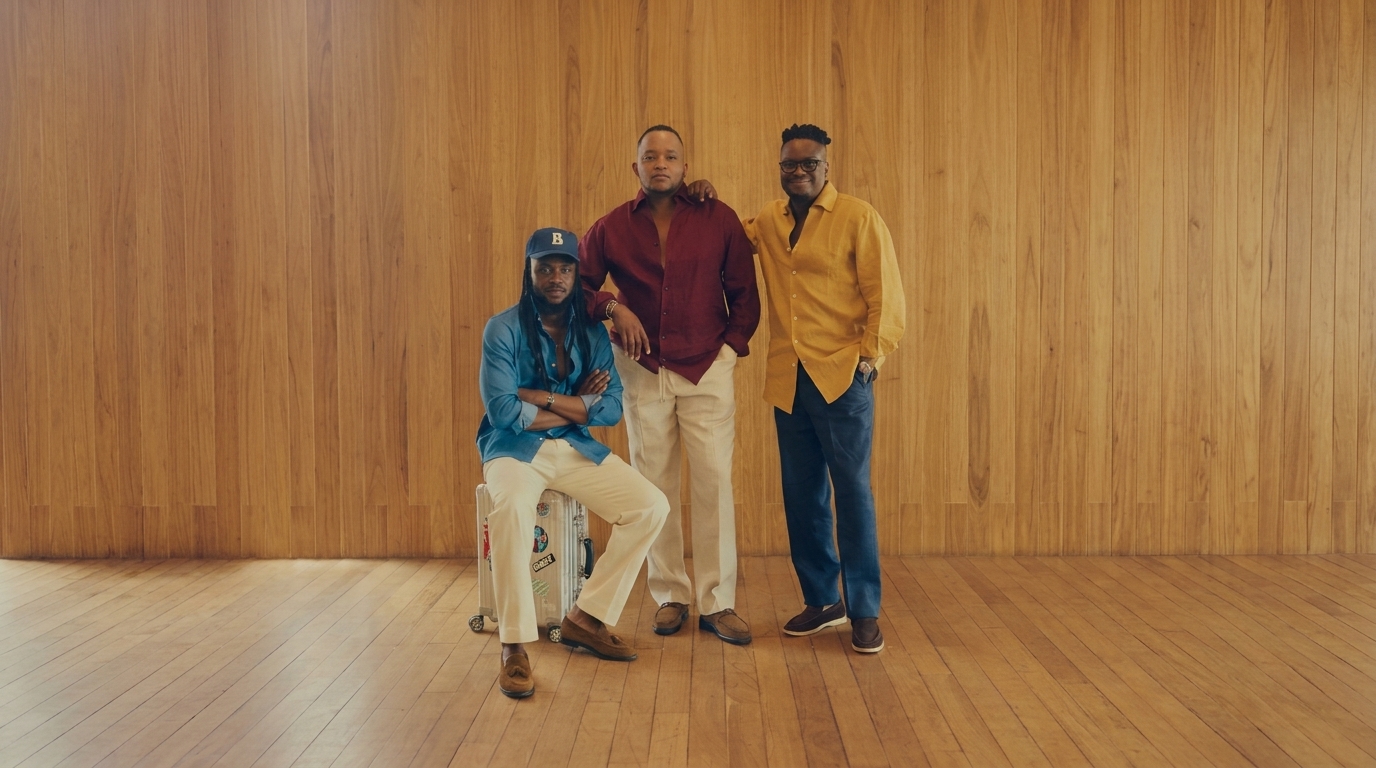
These are among the questions at the heart of My Loves Summer, an evocative group exhibition bringing together three artists whose lives, friendships and creative journeys are deeply intertwined.
Opening at Gallery MOMO on 16 November 2026, the exhibition marks the first time Fhatuwani Mukheli, Justice Mukheli and Sthu Manaka will present their work together in a gallery setting. Running until 14 February 2027, it brings three distinct artistic voices into conversation around identity, faith, memory, tenderness and the complexities of being human.
United through My Loves Studio, a creative relationship built on friendship, brotherhood and a shared commitment to artistic expression, the three artists are connected by much more than a common space. Yet their work refuses to be confined to a single narrative. Each brings a deeply personal perspective, offering audiences three different ways of looking at Black life, spirituality and the relationships that give existence meaning.
The exhibition’s title carries the warmth and familiarity of a South African summer, but its meaning runs much deeper. Love becomes both a subject and a way of seeing: an invitation to look more closely at family, heritage, faith, belonging and the people who shape our lives.
For Fhatuwani Mukheli, that invitation begins with a powerful act of representation: placing Black people where art history has too often failed to place them.
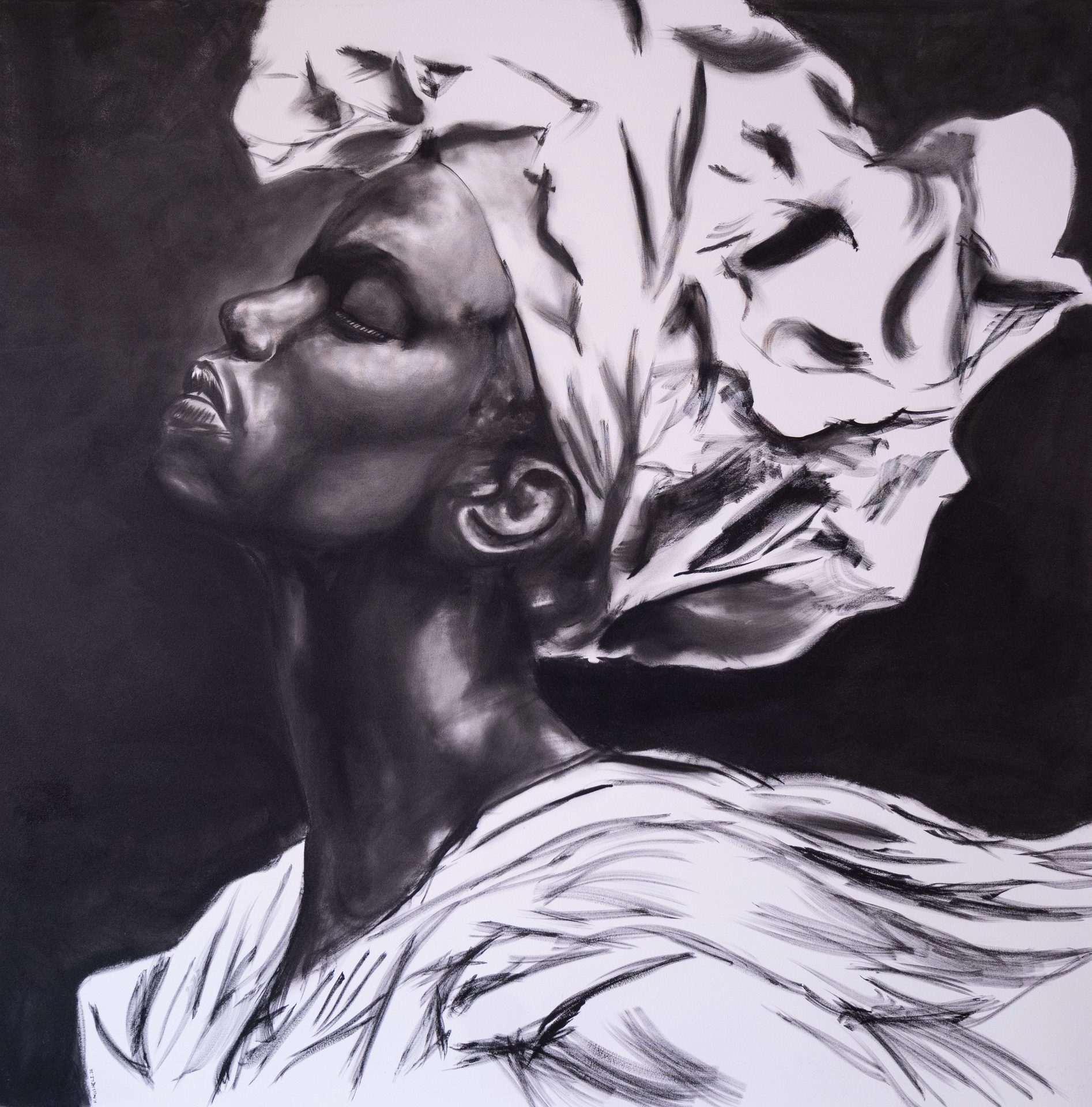
Drawing inspiration from Renaissance painting, Mukheli reimagines the visual language of a tradition in which Black figures have historically been marginalised or excluded. His subjects are not defined by suffering or struggle. Instead, they rest, gather and occupy space with an ease and grandeur that is both striking and deliberate.
Rendered in monochromatic black oil on Belgian linen, his paintings move between drawing and painting. Through the careful application and removal of paint, he creates surfaces that retain the immediacy of charcoal studies. His photographic background informs his sensitivity to light and the human gaze, while his experience in advertising and graffiti contributes to the works’ commanding compositions and scale.
His visual language is also deeply personal, drawing on memories of Soweto and Venda, particularly family gatherings and December visits to his grandfather’s home.
“Black people deserve peace, relaxation, opulence, royalty and joy,” says Mukheli. “I want audiences to leave feeling that this is not an exception but something we were always owed.”
It is an assertion of dignity, but also a reclamation of space. His figures do not ask to be included in the picture. They belong there.
While Mukheli confronts the historical representation of Black bodies, Justice Mukheli takes audiences into the more unsettled territory of spirituality, inherited beliefs and the search for understanding.
Through photographs from his series I Heard There Are Rivers in the Sky, he explores the intersection between ancestral practices and Christianity, using water as a powerful visual and spiritual meeting point.
The selection includes new work produced in Lagos alongside earlier photographs made in South Africa. In both contexts, water carries layered meanings. Within ubungoma, it can become a site of encounter with ancestors, while in Christianity it is associated with baptism, cleansing and renewal.
Rather than attempting to reconcile these belief systems, Justice places their tensions before the viewer, inviting reflection without prescribing answers.
In Untitled IV (2026), a man stands at the water’s edge at dusk, his back turned towards the viewer. His purpose remains ambiguous. Is he there to pray, seek cleansing or communicate with those who came before him? The photograph deliberately refuses to reveal everything.
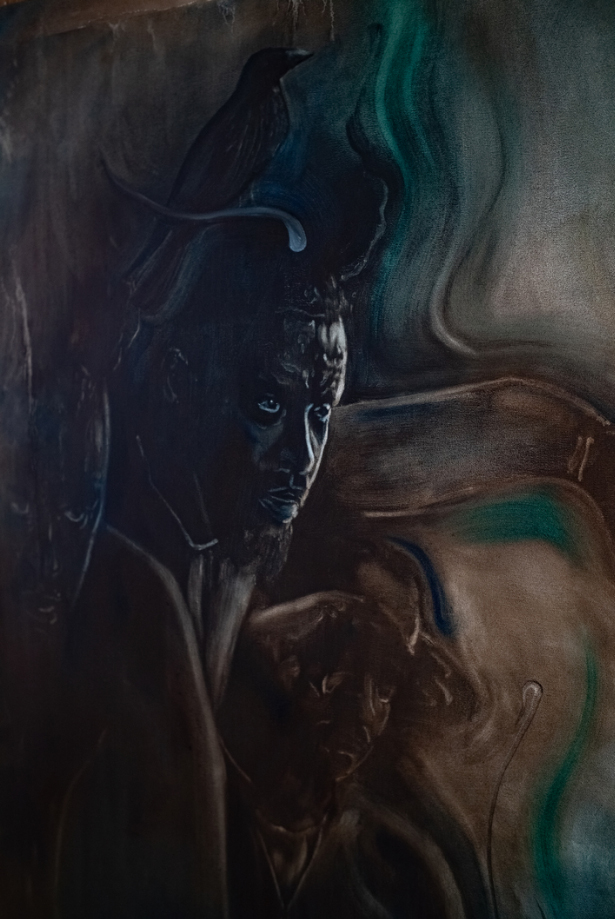
“I am not asking anyone to pick a side. I am asking them to stand inside the question with me,” says Justice Mukheli. “The photograph doesn’t answer that, and neither do I.”
The series is rooted in his own experience of growing up in a Christian environment where there was little room to explore alternative spiritual understandings. His subsequent encounters with ubungoma prompted him to reconsider the beliefs he had inherited.
Working in Lagos expanded that exploration, revealing that the tension between ancestral spirituality and Christianity extends beyond South Africa. Through photography, film and painting, he continues to examine memory, lineage and more tender representations of Black men.
Then there is Sthu Manaka, whose contribution brings the exhibition into an intimate exploration of vulnerability, faith and the invisible forces that sustain human beings.
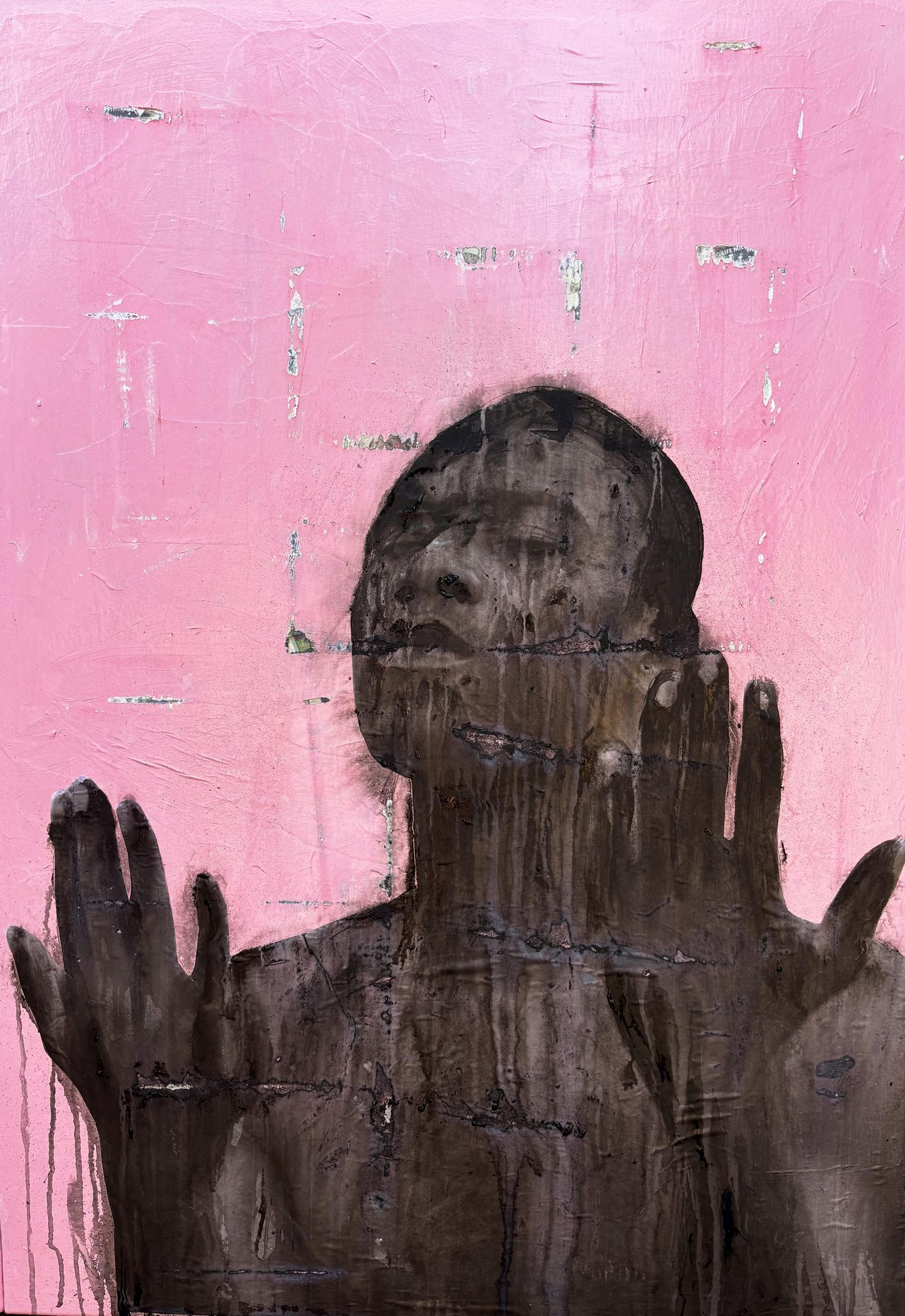
His new body of work, titled Lost Boys, marks a departure from the eye imagery associated with his earlier practice. It turns instead towards the moments when certainty falls away and people are left searching for comfort, protection and reassurance.
At the centre of this collection is Morwa Waka, a work depicting a hand reaching towards a kneeling figure in a gesture of comfort and support. Drawing on the emotional atmosphere of Nduduzo Makhathini’s song At Your Feet, Oh Lord, the image suggests that care can exist even when it cannot be seen or fully understood.
For Manaka, the work speaks to the human experience of moving through joy, grief, uncertainty and the ordinary challenges of life, often unaware of the protection and support surrounding us.
“This body of work is the in-between of life,” says Manaka. “When you are having the time of your life, you do not see the hand that protects you. When you are crying and feeling down, you do not see the hands that shelter you. This work is a reminder that we are not alone.”
The collection also represents an artistic turning point for Manaka. Bringing together techniques developed over time with new explorations of materials and texture, Lost Boys reflects his willingness to move beyond familiar creative territory.
For him, that willingness is inseparable from the subject itself. Faith requires vulnerability, surrender and the courage to trust what cannot always be explained.
Although the three artists approach their subjects differently, their works meet in a shared interest in the inner lives of people and the experiences that shape them. Mukheli restores dignity and grandeur to Black representation. Justice examines the complexities of belief and spiritual inheritance. Manaka explores the unseen dimensions of faith, vulnerability and human connection.
Together, they create a conversation that is at once deeply personal and universally recognisable.
But My Loves Summer is also a celebration of something that cannot easily be captured on canvas or through a camera: the power of creative brotherhood.
What began as a relationship between three men from Soweto has evolved into a shared creative journey in which friendship, encouragement and individual artistic freedom coexist. Their first group exhibition in a gallery setting offers audiences an opportunity to witness the strength of that relationship without losing sight of the distinct voices that define each artist.
Their understanding of love is equally individual. For Mukheli, it means depicting his people with the dignity and grandeur historically reserved for kings, gods and saints. For Justice, it means having the courage to remain with difficult questions. For Manaka, it is the recognition that unseen hands may be carrying us even when we feel most alone.
Perhaps that is the real power of My Loves Summer. It does not attempt to define love through a single image, belief or experience. Instead, it invites audiences to encounter love as an act of recognition, remembrance, questioning and care.
And in a world that so often demands that Black people explain their struggles, defend their beliefs or justify their place, these three artists offer something profoundly different: the freedom to exist, to question, to rest, to believe and to be seen.
My Loves Summer opens at Gallery MOMO on 16 November 2026 and runs until 14 February 2027.
EXHIBITION INFORMATION: My Loves Summer
Artists: Fhatuwani Mukheli, Justice Mukheli and Sthu Manaka
Venue: Gallery MOMO, Johannesburg
Opening date: 16 November 2026
Closing date: 14 February 2027 – @NewsSA_Online
Follow us on our social media platforms below: